Why Hitting a Hot Streak at the Tables Feels Like Nothing — But Nailing a Spread Feels Like Everything
Same Math, Totally Different Feeling
Let's say you win $200 tonight. Doesn't matter how — maybe it was red coming up three times in a row at the roulette table, or maybe it was a -110 spread bet you'd been tracking all week finally cashing. The number in your account looks identical either way.
But it doesn't feel identical. Not even close.
That gap — between what's mathematically the same and what emotionally registers as completely different — is one of the most fascinating and dangerous things happening inside every bettor's brain. And if you're playing on Jom99 without understanding it, you're leaving yourself open to a whole category of bad decisions that have nothing to do with picks or percentages.
The Roulette Problem: Winning Without Owning It
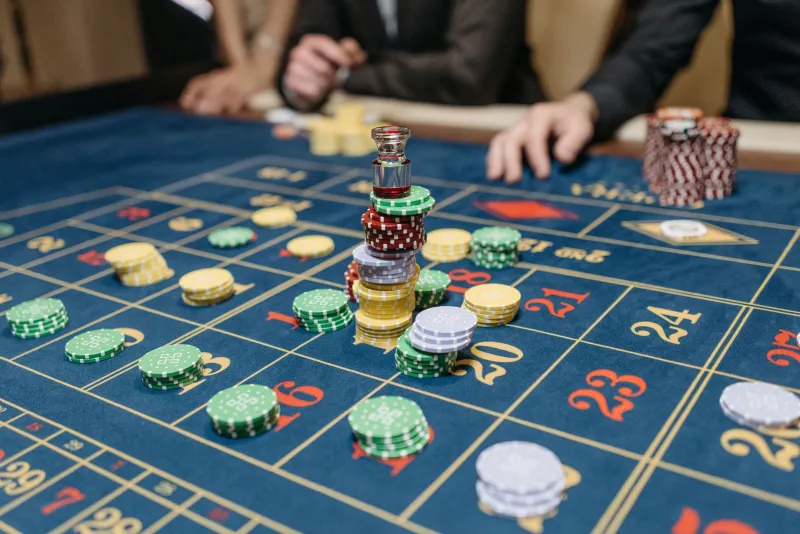
Here's the thing about pure casino games — slots, roulette, baccarat, even most versions of craps. The outcome has nothing to do with you. You didn't analyze anything. You didn't study tendencies, injury reports, or line movement. You pressed a button or placed a chip, and the universe decided.
When you win, there's a hit of dopamine, sure. But somewhere underneath that, there's a quiet voice that knows it wasn't really yours. You got lucky. And humans aren't great at feeling genuinely proud of luck. We appreciate it, we'll take it, but we don't internalize it the same way we internalize something we earned.
This is why casino wins can feel almost hollow after the initial rush fades. You walk away from a hot roulette session up $300, and by the time you're in the parking lot, it already feels a little like it happened to someone else. The money is real. The ownership isn't.
The Sports Bet That Hits Different
Now flip it. You've been watching a specific NFL divisional matchup all week. You noticed the line moved two points in a direction that doesn't match what you're seeing in the advanced stats. You read three injury reports, checked the weather forecast, and talked it through in the Jom99 community forum where someone else confirmed your read from a completely different angle.
You place the bet. You watch the game. Your team covers.
That win doesn't just feel good — it feels validating. It feels like proof that you know what you're doing. The money almost becomes secondary to the satisfaction of being right about something you studied.
This is the psychological asymmetry that doesn't get talked about enough: sports betting is deeply personal in a way that casino games are structurally incapable of being. Your identity gets wrapped up in your picks. Your analysis. Your process.
Why Losses Hit Harder on the Sportsbook Side
Here's where this gets expensive.
If the casino takes $200 from you on a bad roulette session, it stings, but you don't walk away questioning your intelligence. You were unlucky. The wheel didn't care. You know that going in.
But when a sports bet goes sideways? Especially one you felt confident about? That's a different kind of hurt. It doesn't just feel like bad luck — it feels like a personal failure. Like your judgment was wrong. Like you misread something you should have caught.
And that feeling — that sting of being personally wrong rather than just randomly unlucky — is exactly what drives some of the worst decision-making in sports betting. The tilt. The revenge bet. The immediate doubling down to prove yourself right. None of that happens after a roulette loss, but it happens constantly after a painful sports loss, because your ego was on the line in a way it never was at the table.
The Ownership Illusion That Works Against You
Psychologists call it the illusion of control — the tendency to believe we have more influence over outcomes than we actually do. Sports betting feeds this illusion like nothing else. You did do research. You did make a reasoned call. But at the end of the day, a quarterback threw an interception in garbage time that pushed the score past your spread, and no amount of prep work was going to predict that.
The problem is that the sense of ownership that makes sports betting wins so satisfying is the exact same mechanism that makes sports betting losses so personally devastating. You can't have one without the other. The pride and the pain come from the same place.
Casino games, weirdly, protect you from this. You can't take a roulette loss personally because you never personally did anything. There's a psychological buffer built into the randomness.
Using This Knowledge to Bet Smarter
So what do you actually do with this information? A few things.
Separate your ego from your edge. When you're betting sports, your research improves your odds over the long run — but it doesn't guarantee any single outcome. A good process can still produce a bad result on any given night. Remind yourself of that before the game, not after.
Watch for post-loss behavior patterns. If you notice you're more likely to make impulsive bets right after a sports loss than after a casino loss, that's not a coincidence. That's the ownership illusion turning into tilt. Recognize it and step back.
Let casino games be what they are. If you're playing roulette or slots on Jom99, go in with the right mindset — it's entertainment with a cost attached. The thrill is real. The ownership isn't. Enjoy the rush without pretending it's a skill contest.
Use the community as a reality check. One of the best features on Jom99 is that you're not making these calls in a vacuum. Sharing your thinking — even when you lose — helps separate the quality of your process from the randomness of the outcome. Other bettors can tell you if your read was sound even when the result didn't cooperate.
The Real Edge Is Emotional Clarity
At the end of the day, the math on casino games and sports betting can look similar on a spreadsheet. Expected value, house edge, variance — these concepts apply across both. But the experience of betting on them is wildly different, and your brain isn't wired to treat them the same.
The bettors who figure this out stop chasing validation from their sports picks and stop feeling cheated when the casino's randomness doesn't go their way. They play both for what they actually are — not for what they want them to mean about themselves.
That emotional clarity? That's not just good mental health advice. On Jom99, it's a genuine competitive advantage.