Why Losing Twenty Bucks Hurts More Than Winning a Hundred Feels Good
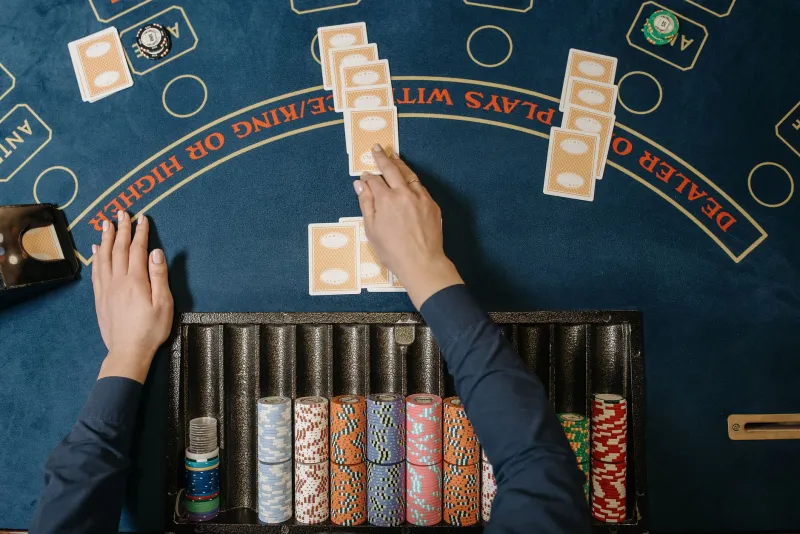
Think back to your last solid session. Maybe you hit a nice run at the blackjack table, walked away up $150, and felt pretty good about it. Now think about the session before that — the one where you dropped $60 chasing a cold streak on slots. Which one are you still replaying in your head?
If it's the loss, you're not alone. And you're not weak or irrational. You're just human.
There's a well-documented psychological principle called loss aversion, and it might be the single biggest invisible force shaping how you play, how you feel after a session, and — most critically — when you decide to keep going versus walk away. Understanding it won't make you bulletproof, but it will absolutely make you a sharper player.
The Brain Keeps Unequal Score
Back in the late 1970s, behavioral economists Daniel Kahneman and Amos Tversky ran a series of experiments that would eventually reshape how we understand human decision-making. Their core finding: losses feel roughly twice as painful as equivalent gains feel good. Losing $50 registers emotionally as about twice as bad as winning $50 feels rewarding.
That's not a metaphor. That's a measurable, reproducible psychological effect. Neuroimaging studies have since shown that financial losses activate the brain's threat-response systems — the same regions that light up when you sense physical danger. Wins, meanwhile, produce a pleasure response, but it's comparatively muted. The emotional math is just not balanced.
For casino players, this creates a specific and very sneaky problem: your emotional ledger is always running a deficit, even when your actual ledger is in the black.
The Highlight Reel Nobody Wants
Here's how this plays out in real life. You sit down for a two-hour session on a Friday night. You're up, you're down, you grind it out, and you end the night roughly even — maybe up $30. By most definitions, that's a decent outcome. You didn't lose, you had fun, you got some entertainment value.
But what do you remember the next morning? Almost certainly the hand you lost with pocket kings. Or the slot bonus round that came up just short. Or the moment you were up $200 and didn't cash out.
The wins blur together. The losses stay sharp. That's loss aversion doing its thing — selectively curating your memory to emphasize pain over pleasure. And the dangerous part isn't the bad feeling itself. The dangerous part is what that feeling makes you do.
The Decisions Loss Aversion Actually Drives
When losses feel disproportionately heavy, players start making choices designed to avoid the feeling of losing rather than choices designed to maximize smart play. These two goals sound similar, but they lead to very different behavior.
Chasing losses is the most obvious example. You're down $80, and instead of recognizing that as an acceptable outcome within your budget, your brain treats it as an open wound that needs to be closed. So you keep playing — often at higher stakes, often with less discipline — because breaking even would feel like relief, and relief is what you're actually chasing, not profit.
Locking up wins too early is the flip side. Because losses hurt twice as much, players sometimes become hyper-conservative the moment they're up, terrified of giving it back. That's not necessarily wrong — booking wins is smart — but when it's driven by anxiety rather than strategy, you're not playing your game anymore. You're playing your fear's game.
Distorted session reviews are the longer-term damage. If you consistently remember your losses more vividly than your wins, you'll tend to underestimate how well you're actually performing over time. Players who are genuinely breaking even — or even running slightly ahead — can convince themselves they're on a terrible streak because the painful sessions stick while the good ones fade.
Recalibrating the Scale
So what do you actually do about this? A few things that genuinely help:
Write It Down — Every Session
Loss aversion thrives in the gap between what actually happened and what you remember. The simplest way to close that gap is to keep a log. Not just the final number, but the arc of the session — when you were up, when you were down, what decisions you made. Over time, a written record gives you an honest baseline that your emotional memory can't distort. Jom99's platform makes it easy to track your activity, so use that data. Don't let your brain rewrite history.
Set Walk-Away Points Before You Start
This is old advice, but it works specifically because of loss aversion. If you decide in advance that you'll leave when you're up $100 or down $50, you're making that decision when you're calm and rational — not when you're emotionally activated by a bad beat. The moment you're in the middle of a loss spiral, your brain is not your friend. Pre-commitment is how you protect yourself from your own threat-response wiring.
Reframe What a "Good Session" Means
This one's harder but more important. A good session isn't just one where you made money. A good session is one where you played within your plan, made decisions you can stand behind, and stayed in control of your behavior. If you dropped $40 but stuck to your budget and had a genuinely fun time, that's not a failure. Loss aversion will try to tell you it is. Don't let it.
Give Wins the Same Airtime as Losses
After a winning session, take sixty seconds to actually sit with it. Acknowledge it. This sounds almost embarrassingly simple, but it matters. Our brains need a little extra encouragement to encode positive experiences because they're not naturally sticky the way negative ones are. Deliberately reflecting on what went right — not in a delusional way, just honestly — helps balance the psychological ledger over time.
Playing Bold Means Playing Honest
At Jom99, we talk a lot about playing bold. But bold doesn't mean reckless. It means clear-eyed. It means making decisions based on what's actually happening, not what your nervous system is screaming at you from the last bad hand.
Loss aversion is one of the most deeply wired features of human psychology. You're not going to think your way out of it entirely — and you shouldn't try. The goal isn't to stop caring about losses. The goal is to stop letting that care distort your read on reality.
Know the bias. Track your actual results. Set your limits before the heat of the moment. And the next time a solid winning session feels somehow unsatisfying, ask yourself: is that really what happened, or is your brain just keeping score with a broken scale?
Because more often than not, it's the scale — not your luck — that's the problem.