Lock It In and Walk Away: The Art of Protecting a Big Win Before It Disappears
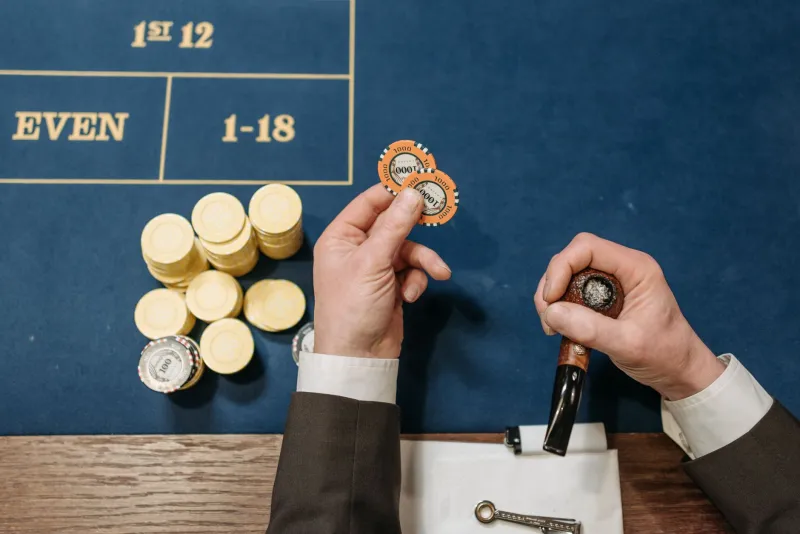
There's a moment every bettor knows. You're up. Significantly up. Maybe it's a parlay that somehow hit, or a hot casino run that turned a $50 session into $400. Your phone is buzzing, your chest is tight, and somewhere in the back of your brain a voice whispers: just one more.
That voice has destroyed more bankrolls than any bad beat ever could.
Winning is supposed to be the goal. But for a lot of players, a big win is actually the starting gun for the most dangerous stretch of betting they'll ever do. Understanding why — and building a real plan to fight it — is one of the most underrated skills in the game.
Why Winning Puts You in the Most Dangerous Spot
Here's the thing nobody tells you when you're riding high: a big win doesn't make you sharper. It makes you looser. Psychologists call it the house money effect — once you've booked a profit, your brain reclassifies those winnings as found money. It feels like it doesn't quite belong to you yet, which means you treat it differently than your original stake.
That psychological reframing is where the damage starts. A $300 profit suddenly feels like a free roll. You start making bets you'd never consider with money from your paycheck. The discipline you brought to the session evaporates because, hey, worst case you just break even, right?
Except that's not how it works. Once that money hits your balance, it's real. Every dollar you give back is a dollar you earned. The house money effect is a trick your brain plays on you, and the table doesn't care about your feelings.
The 'Just One More' Trap Is a Loop, Not a Decision
Ask anyone who's ever turned a $500 night into a $50 night how it happened. Almost nobody can point to one catastrophic bet. It's always the same story: a small loss after the peak, then a slightly larger bet to get back to even, then another loss, then a bigger bet because you're chasing, and before you know it the session is completely upside down.
The trap isn't a single bad choice. It's a loop. Each individual decision feels reasonable in the moment. That's what makes it so hard to escape once you're in it. You're not making one big mistake — you're making twenty small ones that compound into a disaster.
The only reliable exit from that loop is to never enter it. Which means making the walk-away decision before you need to make it.
What Jom99 Community Members Do Differently
Spend any time in the Jom99 community and you'll notice something interesting about the players who consistently protect their profits: they talk about their exits as much as they talk about their picks.
One member — a regular sports bettor from Ohio who goes by the handle DraftKingSlayer on the platform — shared his approach in a community thread last fall. After hitting a four-leg parlay on an NFL Sunday, he immediately transferred 70% of his winnings out of his active balance before placing another bet. "I treat it like a paycheck," he wrote. "The money I made goes somewhere it can't be touched. Whatever's left in the active balance, that's my play money for the rest of the day."
Another Jom99 player, a casino regular from Nevada, described a rule she calls the "retirement percentage." Any time she's up more than 3x her starting session amount, she cashes out half and sets a hard stop-loss on the remaining half. She's never had a winning session turn into a net loss since she started using it.
The common thread isn't the specific numbers — it's the structure. These players aren't relying on willpower in the heat of the moment. They've built a system that takes the decision out of the equation entirely.
Building Your Own Walk-Away System
Willpower is a terrible strategy. You're not going to out-discipline the dopamine loop when you're already in it. The goal is to set your rules when you're calm, rational, and not staring at a balance you're itching to run up.
Here are a few frameworks worth considering:
The Profit Lock Rule. Decide in advance what percentage of any session profit you'll protect no matter what. Fifty percent is a common starting point. Once you hit a meaningful win, that percentage comes off the table — literally. Move it to a separate balance or withdraw it before you keep playing.
The Time Limit Trigger. Rather than a dollar amount, some bettors use time as their exit signal. If you've had a winning session that's run longer than a set window — say, 90 minutes — you call it regardless of whether you feel like you're on a roll. Momentum is a feeling. It's not a fact.
The Peak-Plus-One Rule. Set a stop-loss based on your session high. If you've hit $600 from a $100 starting balance, you decide in advance that you'll walk away if you drop back to $400. You've still booked a solid win, and you've avoided the spiral.
None of these systems are complicated. That's kind of the point. The best walk-away plans are simple enough to actually execute when you're amped up and your judgment is compromised.
The Mindset Shift That Actually Sticks
A lot of bettors resist the walk-away because it feels like leaving something on the table. Like they're quitting while they're ahead instead of maximizing the opportunity.
Flip that framing. Walking away with a win isn't quitting. It's winning. The session had a goal — to come out ahead — and you achieved it. Staying longer doesn't mean you're playing better. It means you're gambling that your luck holds, and luck, by definition, doesn't owe you anything.
The bettors on Jom99 who've built real, sustainable bankrolls over time aren't the ones who ran $100 into $10,000 in a single night. They're the ones who consistently protected profits, absorbed small losses without tilting, and showed up again the next week with their bankroll intact.
Long-term success in betting isn't about the biggest win you ever had. It's about how many of your wins you actually kept.
The Real Flex Is Walking Away
Next time you're sitting on a solid profit, before you load up the next slip or hit the next hand, ask yourself one question: am I betting because I see real value, or am I betting because I don't want to stop?
If the honest answer is the second one, you already have your answer.
The most disciplined move you can make at Jom99 — or anywhere — isn't the perfect pick. It's knowing when you've already won, and being secure enough to let that be enough. Lock it in. Walk away. Come back fresh.
That's not just smart betting. That's the whole game.